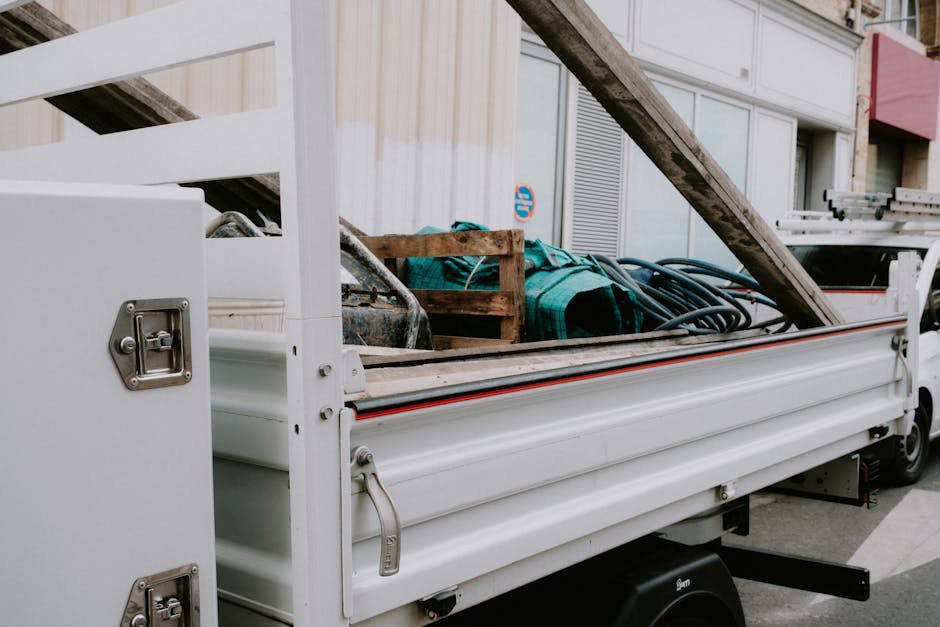
What to do with bulky waste during a De Beauvoir Town move
Posted on 02/06/2026
Moving house in De Beauvoir Town has a habit of exposing everything you forgot you owned. The old wardrobe that won't fit through the stairwell. The sofa that has seen better days. The mattress you meant to replace months ago. Suddenly, bulky waste is not just "stuff to get rid of" - it becomes one of the biggest decisions in the move.
If you are wondering what to do with bulky waste during a De Beauvoir Town move, the short answer is this: sort it early, separate what can be reused or recycled, and arrange the right removal method before moving day gets chaotic. That sounds simple enough, but in real life it's where a lot of people get stuck. Do you store it, sell it, donate it, dismantle it, or have it removed? And what about tight streets, stair-only flats, or items too heavy to shift safely? We'll walk through all of that, calmly and clearly.
This guide is written to help you make sensible decisions without wasting time, money, or energy. A bit of planning now can save a world of last-minute stress later. Truth be told, that's often the difference between a move that feels controlled and one that turns into a weekend-sized headache.

Why bulky waste matters during a De Beauvoir Town move
Bulky waste is any large household item that is awkward to move, difficult to dispose of, or not suitable for an ordinary bin collection. Think sofas, wardrobes, beds, mattresses, desks, shelving, white goods, exercise equipment, broken chairs, and that one mysterious item everyone has to negotiate around for three weeks.
In De Beauvoir Town, bulky items matter even more because many homes are in converted flats, older terraces, or properties with narrow hallways, compact rooms, and shared access. You may not have the luxury of easy driveway loading. A sofa that seems manageable in the lounge can become surprisingly awkward at the front door. A heavy chest of drawers can become a very bad idea on a tight staircase.
That is why this decision should happen early in your move plan, not on the morning you are collecting keys. If bulky waste is left until the end, it can slow down cleaning, complicate the handover, and create unnecessary lifting risks. It can also lead to paying for transport space you did not need to use. One solid decluttering session can change the tone of the entire move.
For many households, the best approach sits alongside a wider pre-move tidy-up. If you are already sorting rooms and trimming down what you want to take, it may help to read our guide on pre-relocation decluttering. A cleaner decision-making process now usually means fewer surprises later. And fewer surprises is always welcome, especially when the kettle is already packed.
How bulky waste removal works in practice
There is no single right way to handle bulky waste. The best method depends on the item's condition, size, lifting difficulty, and whether it still has value. In practice, most move-outs follow a simple pattern: keep, donate, sell, recycle, dismantle, or dispose.
Here is how that usually works:
- Assess the item honestly. Ask whether it is usable, repairable, or simply past its best. A sofa with a torn cover but solid frame may be worth keeping or recovering. A warped chipboard wardrobe probably is not.
- Separate by destination. Create piles for items to keep, items to donate, items to sell, and items for disposal or recycling.
- Check access and lifting risks. Measure doorways, stair bends, lift sizes, and parking access before moving a heavy item. A few minutes with a tape measure can save a long, embarrassing wrestle.
- Decide whether dismantling helps. Flat-pack furniture, bed frames, and modular pieces often become much easier to move when broken down carefully.
- Arrange the right removal method. That might mean taking it in the van with the rest of your move, booking a dedicated bulky clearance, or timing a same-day collection.
When a bulky item is still in decent condition, storage can also be a sensible bridge solution. If you are undecided, our piece on sofa storage techniques may help you decide whether to keep, store, or replace larger furniture. That kind of thinking is especially useful if your new place is smaller than the old one. Happens a lot, to be fair.
For awkward lifting and bulky objects, safety matters as much as logistics. If you are moving heavy pieces yourself, this guide on lifting heavy objects safely gives a good sense of what not to improvise. And if the item is something particularly specialist, like a piano, don't treat it like another box of books. There is a reason piano moving should not be a solo job.
Key benefits and practical advantages
Handling bulky waste properly is not just about "getting rid of stuff." It gives you a cleaner move, a safer moving day, and a better start in your new home.
| Benefit | What it means in real life |
|---|---|
| Less clutter | You move fewer items, which makes packing and loading faster and calmer. |
| Lower lifting risk | You avoid wrestling awkward furniture through narrow hallways and stairs. |
| Better use of van space | The moving vehicle is used for items you actually want to keep. |
| Cleaner handover | Your old property is easier to tidy and leave in a presentable state. |
| More sustainable choices | Reusable items can be passed on or recycled instead of simply thrown away. |
There is also a quiet emotional benefit here. A move can feel surprisingly lighter when you are not dragging old baggage into a new chapter - literal baggage, in this case. That old broken shelving unit? It does not need to come with you just because it has been there for years.
For households with a lot of furniture, the process often links neatly with broader services such as furniture removals in De Beauvoir Town. If your bulky items are worth moving but awkward to handle, getting them moved professionally may be the most efficient choice. And if you are moving a full property rather than one or two items, a more structured service like house removals in De Beauvoir Town can make the logistics much simpler.
Who this is for and when it makes sense
Bulky waste decisions matter for almost anyone moving home, but a few situations make them especially important.
- People moving from flats or maisonettes where stair access is tight or lifts are small.
- Tenants ending a lease who need the property clear and tidy for handover.
- Homeowners downsizing and not taking every large item with them.
- Students who are moving between shared housing and want to avoid hauling furniture that is no longer needed.
- Office movers clearing desks, storage units, old chairs, or bulky equipment.
- Anyone on a tight schedule who needs a fast, reliable decision rather than a weeks-long "we'll deal with it later" plan.
If your move is especially compressed, same-day support can be a practical safety valve. That is where same-day removals in De Beauvoir Town can be useful, particularly when bulky items need to be cleared quickly before keys are handed over. For renters in smaller homes, flat removals in De Beauvoir Town can be a better fit than trying to improvise with a borrowed van and two tired friends.
Sometimes the question is not, "Can I move this?" but "Should I move this?" That distinction matters. A very heavy item can be technically movable and still not be worth the hassle, cost, or risk.
Step-by-step guidance
Here is a practical process you can follow without overthinking it.
- Walk through the property room by room. Identify all large items, especially those in lofts, basements, storage cupboards, and shared spaces.
- Put each item into one of four groups. Keep, sell/donate, recycle, dispose. Simple categories help you move faster.
- Check condition and usefulness. If the item is dirty, broken, unstable, or mismatched with your new home, be honest about whether it still earns its place.
- Measure before you lift. Measure furniture dimensions and compare them with doorways, stair turns, lift openings, and van access.
- Dismantle where it helps. Beds, wardrobes, tables, and shelving often become easier to handle when partially broken down.
- Protect floors and walls. Use blankets, corner protectors, or simple cardboard sheets if you are moving bulky pieces through tight spaces.
- Book removal support early. If you need a van, helpers, or a disposal plan, do not wait until moving day morning.
- Load heavy items first if they are going with you. That keeps the van balanced and avoids pinning smaller boxes behind a giant sofa.
- Do a final sweep. Check sheds, hall cupboards, behind doors, and under beds. Bulky waste has a funny way of hiding in plain sight.
One useful habit is to pair this with packing work in the same order you plan to remove things. Our packing tricks for a hassle-free move article covers how a good sequence can reduce confusion. If your home is being cleaned before handover, you may also find expert advice on achieving a pristine house before you move helpful, because bulky waste and final cleaning usually belong in the same plan.
Small practical moment: a resident on a narrow De Beauvoir staircase once told us the hardest part was not the wardrobe itself, but the turn at the landing. That is exactly the sort of detail people forget. Measure the bend, not just the door. It sounds obvious afterwards, of course.
Expert tips for better results
If you want the process to go more smoothly, a few practical habits make a big difference.
- Start with the largest item first. Big decisions become easier once the worst offender is dealt with.
- Photograph items before selling or donating them. Even simple photos help you judge condition and keep records.
- Keep tools nearby. Screwdrivers, Allen keys, gloves, tape, and a marker pen are basic but very useful.
- Strip items before moving. Remove drawers, cushions, shelves, and loose parts so they do not snag during handling.
- Use clear labels. "Recycle," "keep," and "dispose" sounds obvious, but on a busy day clear labels save time.
- Think about value, not just size. Some bulky items are worth moving because replacing them would cost more than transporting them.
- Protect yourself physically. Wear sensible shoes and do not twist while carrying weight. Your back will thank you later.
If the bulky item is also fragile or expensive, read up on handling and coverage before you start. Our insurance and safety information is a good reminder that moving risk is not only about damage to the furniture - it is also about people, property, and peace of mind. A careful move usually feels slower for the first ten minutes, then suddenly much better. Funny how that works.

Common mistakes to avoid
Most bulky waste problems are preventable. They usually happen because someone is trying to save time at the wrong stage of the move.
- Leaving sorting until moving day. This is the big one. It creates clutter and panic when you can least afford it.
- Assuming everything can go in the van. Space, weight, and access matter. So does the condition of the item.
- Forgetting to measure doorways or stair turns. This causes avoidable damage and frustrating delays.
- Trying to move dangerous items without help. Large wardrobes, pianos, and very heavy appliances can be genuinely risky.
- Mixing items meant for different destinations. One wrong item in a load can create unnecessary sorting later.
- Ignoring the new home layout. Just because something fits in the old place does not mean it belongs in the new one.
- Forgetting disposal timing. If you need something gone before checkout, don't leave it until the last evening and hope for the best. That rarely ages well.
Another thing people overlook is the "half decision" problem. They know they do not want the item, but they keep it because it might be useful someday. Bulky stuff is very good at living in that limbo. Be slightly ruthless, but fair. If it has not served you in years, the move may be the clean break it needs.
Tools, resources and recommendations
You do not need specialist equipment for every bulky item, but the right basics make a huge difference.
| Tool or resource | Why it helps | Best used for |
|---|---|---|
| Measuring tape | Checks access, item size, and awkward corners | Wardrobes, sofas, bed frames, appliances |
| Furniture blankets | Helps protect surfaces and edges | Wooden furniture, painted items, hallway protection |
| Allen keys and screwdrivers | Useful for dismantling beds and flat-pack furniture | Self-assembly items, shelving, tables |
| Gloves with grip | Improves hold and reduces scrapes | Heavy, dusty, or rough-edged items |
| Labels and marker pens | Keep keepers, movers, and disposals separate | Whole-home sorting |
If your bulky waste is tied to storage decisions, our page on storage in De Beauvoir Town can be useful when you are not ready to part with furniture but also cannot fit it into the new property yet. That middle ground is common. Not everything has to be decided in one rush, despite what moving-day adrenaline suggests.
For larger or mixed loads, a flexible vehicle option may also help. If you want a straightforward transport solution, take a look at the man and van service in De Beauvoir Town or the wider removal services overview. Those pages are useful if you are comparing how much support you really need rather than booking blindly.
Law, compliance, standards, and best practice
When bulky waste is being removed, the main thing to remember is that waste should be handled responsibly and by a legitimate route. In the UK, households are generally expected to avoid fly-tipping, dumping items in unsuitable places, or handing waste to someone who cannot dispose of it properly. That part is common sense, but it is worth saying plainly.
If you are using a removal company or a van service, it is reasonable to ask how bulky items will be taken away, where they will go, and whether recyclable items are separated where possible. Good operators should be able to explain their process in clear terms. You do not need a lecture, just a straight answer.
Safe handling is just as important. Large items should be carried in a way that reduces strain and damage. That means planning the route, using enough people for the load, and not forcing a heavy object through a gap that is obviously too small. A quick pause at the bottom of the stairs is often wiser than a rushed attempt that ends with a scratched wall or strained shoulder.
For customers who want additional reassurance, it can help to check a provider's safety, insurance, and service terms before agreeing a booking. Our own terms and conditions and related information pages exist to set clear expectations, while health and safety policy guidance reflects the kind of standards that matter on a real job. A tidy, transparent process is usually the best sign you are dealing with people who take the work seriously.
Options, methods, and comparison table
There are several ways to deal with bulky waste during a move. The best choice depends on speed, condition, budget, and how much effort you want to spend.
| Method | Best for | Pros | Watch-outs |
|---|---|---|---|
| Keep and move it | Items still useful and worth the space | No replacement cost, familiar furniture | Can be heavy, awkward, and space-consuming |
| Store it temporarily | Items you may need later but cannot place yet | Buys time, avoids rushed decisions | Extra cost, added handling |
| Donate or pass on | Usable furniture and household items | Useful, sustainable, often quick | Condition must be good enough for reuse |
| Recycle or dispose | Damaged, worn, or unusable bulky waste | Clears space responsibly | Needs the right collection or haul-away method |
| Professional removal | Large, heavy, or awkward items | Less strain, faster, more controlled | Should be booked in advance where possible |
For many households, the best answer is a mix of methods. Keep what suits the new home, store what you are not ready to lose, and remove the true bulky waste before the move gets underway. That layered approach is usually far calmer than trying to make one single decision for every item in the house.
Case study or real-world example
A common De Beauvoir Town scenario goes like this. A couple is moving from a first-floor flat into a slightly smaller place nearby. They have a large sofa, a bed frame, a broken dining chair set, and a bulky TV unit that no longer suits the new layout. At first, they plan to take everything and "sort it later."
Then they measure the stairwell. The sofa is technically possible but awkward. The bed frame is dismantlable, which helps. The dining chairs are no longer stable enough for regular use. The TV unit is too wide for the new living room and would just crowd the space.
They split the job into clear decisions:
- The sofa is kept for now, but they use careful protective wrapping and a proper moving plan.
- The bed frame is dismantled and packed with labelled fittings.
- The chairs are removed for recycling.
- The TV unit is sold cheaply to someone who can use it immediately.
What changed the mood of the move was not a miracle, just clarity. Once the bulky items were assigned a destination, everything else became easier. Boxes packed more neatly. The hallway stayed clearer. The final clean was simpler. And the move felt like a move, not a rescue mission.
If the main issue is heavy furniture that still has value, it can be worth pairing your plan with specialist help. A sensible moving setup, especially one informed by stress-free and organised moving advice, often saves more time than it costs. That is not marketing fluff; it is just the reality of how home moves tend to unfold.
Practical checklist
Use this checklist a few days before moving day. It keeps bulky waste decisions concrete, which is half the battle.
- Identify all bulky items in every room.
- Decide whether each item will be kept, stored, sold, donated, recycled, or disposed of.
- Measure the item and the access route.
- Check whether the item can be dismantled safely.
- Separate screws, fittings, and loose parts in labelled bags.
- Protect floors, walls, and corners if items will be moved through narrow spaces.
- Confirm who is lifting what, and do not leave the heaviest items to the end.
- Book a van or removal support if needed.
- Keep donation, recycling, and disposal items clearly separated.
- Do a final sweep of lofts, sheds, cupboards, and under-bed storage.
Quick takeaway: the best bulky waste plan is the one you make early, keep simple, and follow through on before the moving chaos kicks in.
Get a free quote today and see how much you can save.
Conclusion
Dealing with bulky waste during a move is rarely glamorous, but it is one of the smartest things you can sort out early. The more clearly you decide what stays, what goes, and what needs special handling, the easier the rest of the move becomes. In a place like De Beauvoir Town, where access can be tight and properties often have their own quirks, that clarity matters even more.
Whether you are clearing out a sofa, moving a bed frame, or deciding that a heavy wardrobe has finally earned retirement, the key is to plan with honesty and a little practical judgement. Don't keep things out of habit. Don't carry risk for no good reason. And don't leave the bulky stuff until moving day if you can help it.
Handled well, bulky waste is just another part of a well-run move. Handled badly, it can take over the day. The good news? You get to choose which version you have. And once the heavy things are gone, the new place can feel lighter almost immediately.